By Taang Khup, (CFO/ ED- ZPCC)
At dawn today, my thoughts turned once again to the political condition and national struggle of Zogam and the Zomi people. These reflections are neither abstract nor academic exercises alone; they arise from lived realities—displacement, uncertainty, endurance, and an unresolved search for dignity.
At this moment in history, Zogam stands before three strategic paths, each carrying profound consequences. None offers an easy victory. Each demands clarity, restraint, and an honest reckoning with cost. What follows is an examination of these paths, approached with sobriety, realism, and a deep concern for the survival and future of our people.
Path One: Elections as a Political Instrument
The first path is participation in elections that are neither free nor fair. These elections are not designed to transfer power but to recycle and legitimize military authority under controlled conditions. Conducted within the framework of the 2008 Constitution, they have repeatedly demonstrated their limits.
Between 2015 and 2020, electoral participation did not translate into meaningful representation of ethnic or national interests. Core issues affecting Zogam and other ethnic communities were sidelined. Even broader national development became subject to selective priorities rather than inclusive governance.
Members of Parliament, constrained by structural realities, were often reduced to navigating tenders and administrative favors rather than advancing the political aspirations of their constituents. Participation under such conditions communicates an unspoken message: remain present, but do not expect transformation.
This path offers participation without power and visibility without influence—a political theater that absorbs energy while preserving the status quo.
Path Two: Militarization and Armed Confrontation
The second path is armed struggle—reliant on weapons, logistics, and, in some cases, external backing. In a world shaped by global superpowers, modern warfare is asymmetric and unforgiving. Surveillance technologies and drone strikes allow devastation to be delivered remotely, often without accountability.
Under such conditions, it is not military installations alone that suffer. Villages, water sources, farmland, and civilian livelihoods become immediate casualties. While the military regime may appear challenged or exposed, it is far from defeated.
Endless cycles of violence—driven by anger, retaliation, and the impulse to erase perceived enemies—do not build nations. Decisions forged in fear and rage rarely produce justice or stability. History offers no example of a durable state emerging from governance that collapses and reconstitutes itself week by week through force.
Where people, land, and survival are already deeply intertwined, the militarization of politics risks destroying the very society it claims to defend. If change is to be realized, political mechanisms—however imperfect—must be strengthened and reimagined, not replaced by perpetual war.
Path Three: The Unavoidable Dilemma
The third path is the most difficult precisely because it remains unresolved. Continuing elections that entrench military dominance are untenable. Escalating armed conflict—especially when entangled with global power rivalries—risks catastrophic loss to our people, villages, and natural foundations.
This leaves us confronting a question that cannot be ignored:
What, then, is the third way?
It is a question without easy answers, but one that must be faced honestly rather than avoided through false certainty.
Reflection and Analysis
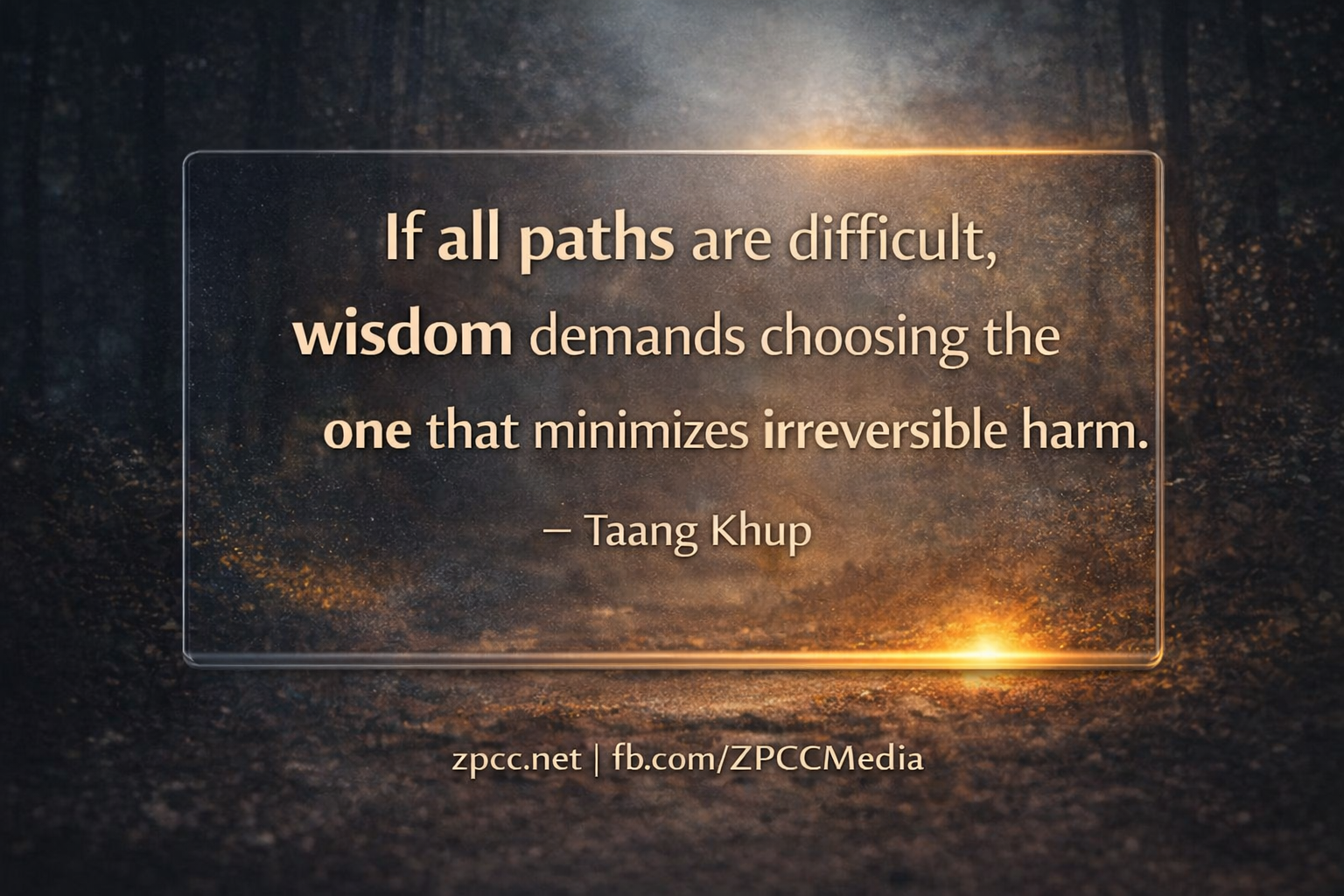
As I consider the fate of our nation and our people, I recognize a sobering truth: none of these paths guarantees success. Yet if hardship—or even failure—is unavoidable, wisdom demands choosing the course that preserves people rather than destroys them.
Between bullets and bombs fueled by vengeance, and the slower, uncertain labor of political engagement through peace, I am convinced the latter remains the more humane and strategically sound option. Even an imperfect civilian system generates less fear, less bloodshed, and fewer irreversible losses than endless war.
For Zogam and the Zomi people, choosing ballots over bullets—even deeply flawed ones—may still reduce anxiety, preserve social fabric, and protect the space necessary for future reform.
Looking Ahead: The National Future
If all available paths appear fraught, then clarity of purpose becomes essential. The Zomi people must stand firmly for national survival, unity, and collective dignity.
Should the military regime eventually be displaced—whether by internal transformation or external pressure—we must be prepared to act decisively. Such preparedness must be anchored in the principle of Peace Through Strength: unity, discipline, institutional readiness, and moral coherence.
If, alternatively, a civilian government emerges through elections—however limited—the struggle must shift toward reforming the 2008 Constitution and asserting Zogam’s status as a fully recognized national entity. Even in such a scenario, strength remains indispensable: political strength to negotiate, social strength to remain united, and moral strength to resist regression.
These reflections came to me at dawn—not as declarations of certainty, but as an honest reckoning with reality. They emerge from concern, restraint, and a persistent hope for my people.
“History will not judge us solely by how fiercely we resisted, but by how wisely we preserved the people who must inherit the future.”
— Taang Khup, ZPCC