A Symbol of Faith, Reconciliation, Unity, and Hope
The Zomi Flag is far more than a visual emblem. It is a profound expression of faith, identity, and shared values that define the Zomi people. Rooted in spiritual conviction and communal heritage, the Zomi Flag stands not as a political symbol, but as a cultural, traditional, communal, and deeply spiritual representation of who we are and what we believe.
At this crucial moment in history—marked by conflict, division, displacement, and uncertainty—the Zomi Flag offers a timeless message: true unity and peace are born out of reconciliation, and reconciliation begins with God.
The Cross at the Center: The Foundation of Reconciliation
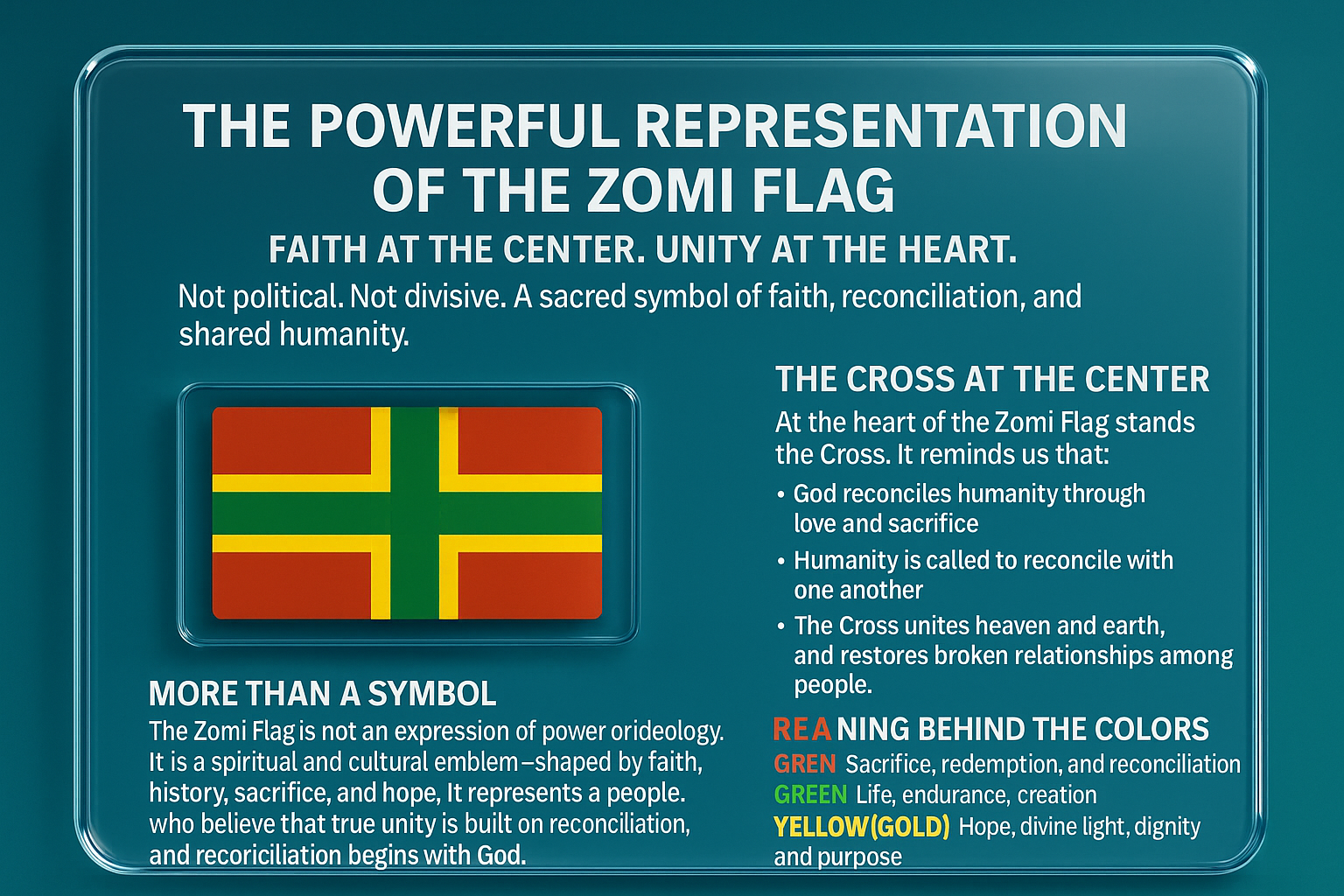
At the heart of the Zomi Flag stands the Cross, intentionally placed to reflect its central role in the spiritual life of the Zomi people.
The Cross carries a dual meaning:
- Vertical reconciliation — restoring the relationship between God and humanity
- Horizontal reconciliation — restoring relationships among human beings
This reflects a core Christian truth expressed in Scripture:
“God was in Christ reconciling the world to Himself, not counting people’s sins against them.”
— 2 Corinthians 5:19
The Cross reminds us that reconciliation with God transforms how we live with one another. It calls us away from division, hatred, and revenge, and leads us toward forgiveness, humility, and peace.
The Meaning of the Colors
Every color of the Zomi Flag carries spiritual and communal significance:
- Red symbolizes the blood of Jesus Christ—sacrifice, redemption, and reconciliation.
- Green represents life, endurance, creation, and community, reflecting resilience and hope.
- Yellow (Gold) signifies divine light, dignity, hope, and purpose, pointing toward God’s guidance.
Together, these elements express faith lived out in community—faith that sustains, unites, and restores.
Not a Political Symbol, but a Spiritual One
It is important to affirm clearly:
The Zomi Flag is not a political emblem.
It does not promote power, dominance, or ideology. Instead, it reflects:
- shared identity,
- spiritual heritage,
- communal responsibility,
- and moral values rooted in faith.
The Zomi Flag speaks quietly yet powerfully—calling people not to confrontation, but to conscience.
A Message Beyond the Zomi People
While the Zomi Flag is born from the history and faith of the Zomi people, its message extends beyond ethnic or geographic boundaries.
In a world fractured by:
- ethnic conflict,
- political polarization,
- religious misunderstanding,
- and spiritual emptiness,
The Zomi Flag offers a reminder relevant to all humanity:
Peace over conflict.
Unity over division.
Reconciliation over hatred.
Scripture affirms this calling:
“He Himself is our peace, who has made the two groups one and has destroyed the dividing wall of hostility.”
— Ephesians 2:14
A Call Back to God and to One Another
At its core, the Zomi Flag is a call—a call back to God, and a call back to one another.
True healing of societies begins with healing of the heart. Healing of the heart begins with humility, forgiveness, and reconciliation. As Scripture teaches:
“Blessed are the peacemakers, for they shall be called children of God.”
— Matthew 5:9
In this way, the Zomi Flag becomes a reminder that peace is not merely the absence of conflict, but the presence of restored relationships.
The Zomi Flag stands as a symbol of faith anchored in the Cross, unity grounded in reconciliation, and hope rooted in God’s grace.
It does not demand allegiance—it invites reflection.
It does not divide—it reconciles.
It does not dominate—it heals.
In its simplicity lies its strength.
In its faith lies its unity.
In its Cross lies its power.
Department of Religious Affairs
Zomi Political Coordination Council (ZPCC)